

Pasiphae
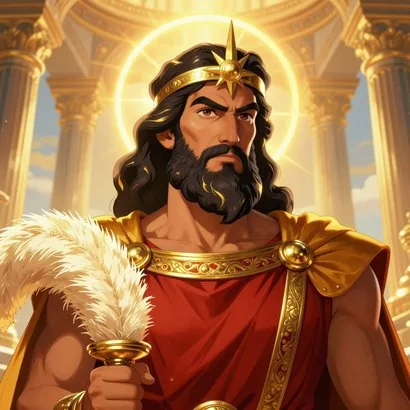
Pasiphae was the daughter of the Sun god Helios and the wife of Minos, king of Crete. She is best known as the mother of the Minotaur, the bull-headed creature that Minos kept in the Labyrinth, and as the mother of Ariadne and Phaedra.
Family
Apollodorus calls Pasiphae the daughter of the Sun and of Perseis, and the sister of Aeetes, who became king of Colchis, and of Circe (Library 1.9.1, 3.1.2). Her mother, called Perse in Homer, was a daughter of Oceanus (Odyssey 10.138–139; Hesiod, Theogony 956–957, where Perseis bears Circe and Aeetes to Helios). Pasiphae was therefore an aunt of Medea, Aeetes’ daughter. Colchis was the kingdom of her brother; Pasiphae herself married Minos, son of Zeus and Europa, and lived in Crete.
Apollodorus lists her children by Minos as the sons Catreus, Deucalion, Glaucus and Androgeus, and the daughters Acalle, Xenodice, Ariadne and Phaedra (Library 3.1.2).
Family of Pasiphae
- Parents
- Helios, Perse, Perseis, the Sun
- Consorts
- Cretan Bull, Minos
The Bull from the Sea
The story of the Minotaur begins with Minos’ claim to the throne of Crete. After the death of the previous king, Asterius, Minos told the Cretans that the gods had given him the kingdom, and asked Poseidon to send a bull up from the sea as a sign. Poseidon did, and Minos was to sacrifice it to him. Instead Minos admired the animal, sent it to his herds and sacrificed another. Apollodorus says that Poseidon, angry, “made the animal savage, and contrived that Pasiphae should conceive a passion for it” (Library 3.1.3–4). The punishment was aimed at Minos but fell on his wife.
Daedalus and the Wooden Cow
Pasiphae turned to the Athenian craftsman Daedalus, who had been banished from Athens for murder and was living in Crete. He built a wooden cow on wheels, hollowed it out, covered it with the hide of a cow that had been skinned, and set it in the meadow where the bull grazed. Pasiphae climbed inside, and the bull mated with it as though it were a real cow.
The Minotaur
Pasiphae gave birth to Asterius, who was called the Minotaur. In Apollodorus’ words he had the face of a bull, but the rest of him was human. Minos, following the advice of oracles, shut him up and guarded him in the Labyrinth, the building Daedalus designed (Library 3.1.4). In later times the creature was fed on Athenian youths until Theseus killed it with the help of Pasiphae’s daughter Ariadne. See the pages on Minos and the Minotaur for that story. Ovid tells the tale of the bull briefly in the Metamorphoses (8.131–137, 155–168) and at length in the Art of Love (1.289–326), where Pasiphae jealously drives her cow rivals from the pasture.
Hyginus gives the cause differently: Pasiphae had neglected the rites of Venus for some years, and the goddess punished her with the unnatural passion. In his telling Minos, on learning what had happened, imprisoned Daedalus, and it was Pasiphae who freed him from his chains before he made the wings for himself and Icarus (Fabulae 40). Diodorus likewise says that Pasiphae helped Daedalus escape from Crete by providing a ship (4.77.5), and in his genealogy her mother is Crete, not Perseis (4.60.4).
Pasiphae the Sorceress
Like her sister Circe and her niece Medea, Pasiphae knew spells. Apollodorus says that because Minos lay with many women she bewitched him, so that whenever he took another woman to his bed he discharged wild beasts at her and she died; the Athenian Procris protected herself with the “Circaean root” before sharing his bed, and received from him a hound and a dart that never missed (Library 3.15.1). In Laconia there was a dream-oracle at Thalamae: Plutarch speaks of a temple of Pasiphae there whose oracle was held in honour, and of a Spartan ephor who slept in her precinct to receive a dream (Agis 9.2; Cleomenes 7.2). Pausanias, who visited the place, describes the sanctuary as Ino’s, with bronze statues of Pasiphae and Helios in its courtyard, and says that Pasiphae there is a title of the Moon, not the wife of Minos (3.26.1).
Her Daughters
Two of Pasiphae’s daughters belong to the most famous stories of the Theseus cycle. Ariadne fell in love with Theseus when he came to Crete as one of the tribute victims, and gave him the thread that let him find his way out of the Labyrinth. Phaedra later married Theseus herself, and her passion for her stepson Hippolytus led to the deaths of both.
Her Sons
Her sons Catreus, Deucalion, Glaucus and Androgeus appear in other tales. Glaucus as a child fell into a jar of honey and drowned, and was brought back to life by the seer Polyidus (Library 3.3.1–2). Androgeus was killed in Attica, and Minos went to war with Athens to avenge him, imposing the tribute of young Athenians that fed the Minotaur until Theseus ended it (Apollodorus, Library 3.15.7–8). Deucalion is the brother from whom Theseus later received Phaedra as a wife (Epitome 1.17). Pasiphae herself does not appear in these later stories.
See Also: Helios, Minos, Circe, Aeetes, Medea, Ariadne, Phaedra, Glaucus, Minotaur, Poseidon, Daedalus
What the ancient sources say
Passages that name Pasiphae, in the original with English translation. The line gives the work and reference as scholars cite it.
- Diodorus Siculus, Library of History, Books 4 to 6 (the Greek myths) 4.76.1–4.80.6Daedalus, Minos in Sicily and the Mothers at EngyumDaedalus, an Athenian craftsman who invents the saw and the potter's wheel, flees to a deme of Attica after the death of his nephew, then to Crete, where he…
- Plutarch, Life of Agis 8.1–10.4Agis' land and debt bill, the oracles of Pasiphae, and Leonidas' objectionAgis has Lysander elected ephor and uses him to bring a bill to cancel debts and divide the land into 4,500 and 15,000 lots, with provincials and foreigners…
- Apollodorus, The Library (Bibliotheca), with the Epitome 3.1.1–4Europa, Minos and the birth of the MinotaurZeus takes the form of a bull and carries Europa from Phoenicia to Crete, where she bears Minos, Sarpedon and Rhadamanthys, while her brothers Cadmus,…
- Palaephatus, On Unbelievable Tales 0.1–3Preface, Proem, Centaurs, Pasiphae, the Sown MenFesta’s Latin preface and Palaephatus’ proem on why he rationalises myth, followed by the first three tales. The Centaurs become bull-hunting horsemen from…
- Plutarch, Life of Cleomenes 6.1–9.4Leuctra and Lydiadas; Cleomenes kills the ephors; the temple of FearCleomenes bribes the ephors to send him on an expedition, with his mother Cratesicleia's help, and at Leuctra, a stronghold of Megalopolis, his army routs…
- Apollonius Rhodius, Argonautica 3.1026–1162Medea's charm and the lovers' partingMedea tells Jason how to use the charm: sacrifice to Hecate by night, anoint himself and his weapons, and throw a stone among the Earthborn men. They…
- Pausanias, Description of Greece 3.26.1–11Thalamae, Pephnus, Leuctra, Cardamyle and Gerenia: the Machaon shrinePausanias describes the dream oracle of Ino near Thalamae, the islet of Pephnus where the Dioscuri were said to be born, and Leuctra, with its shrines of…
- Antoninus Liberalis, Metamorphoses 40.1–41.10Britomartis and the FoxBritomartis, fleeing Minos and then a fisherman, vanishes in a grove on Aegina and is worshipped as Aphaea. Cephalus and Procris test each other's…



 Cite This Article
